I’m Hazel — a breathwork facilitator (in training), community builder, and someone who has spent much of my life creating spaces for others to connect.
For years my world revolved around movement. I worked in community facilitation and events, producing gatherings, festivals, and nightlife spaces where people could come together and feel alive.
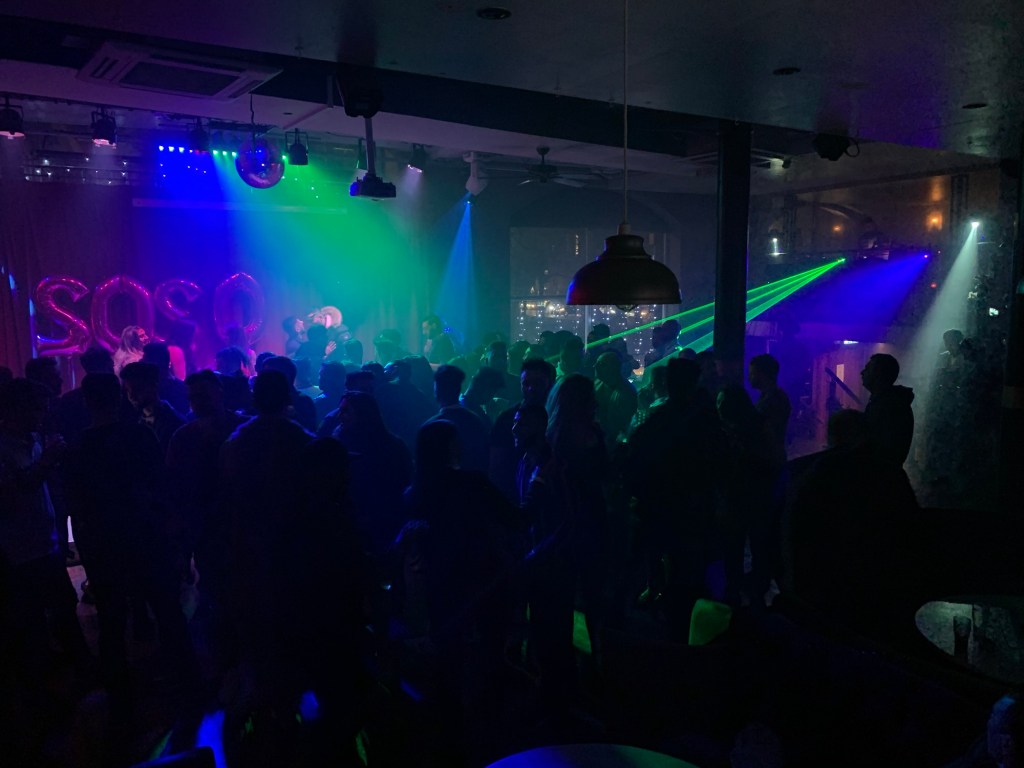
From the outside, it looked vibrant.
But internally, my nervous system was exhausted.
Like many people carrying unresolved trauma, I learned to keep moving. Busyness became a form of survival. Alcohol became a way to soften the noise inside my mind. Nicotine was my only ‘time out.’ Escapism was my norm. Avoidance coping mechanisms were my functioning survival mode, a constant heighten state of fight or flight.
Eventually my body started asking clearly for something different. I wasn’t able to break the patterns or sit with the pain of my own traumas. Eventually my body demanded something different. I still wasn’t able to be still so my body started to collapse under the pressure so I have no choice but to stop.
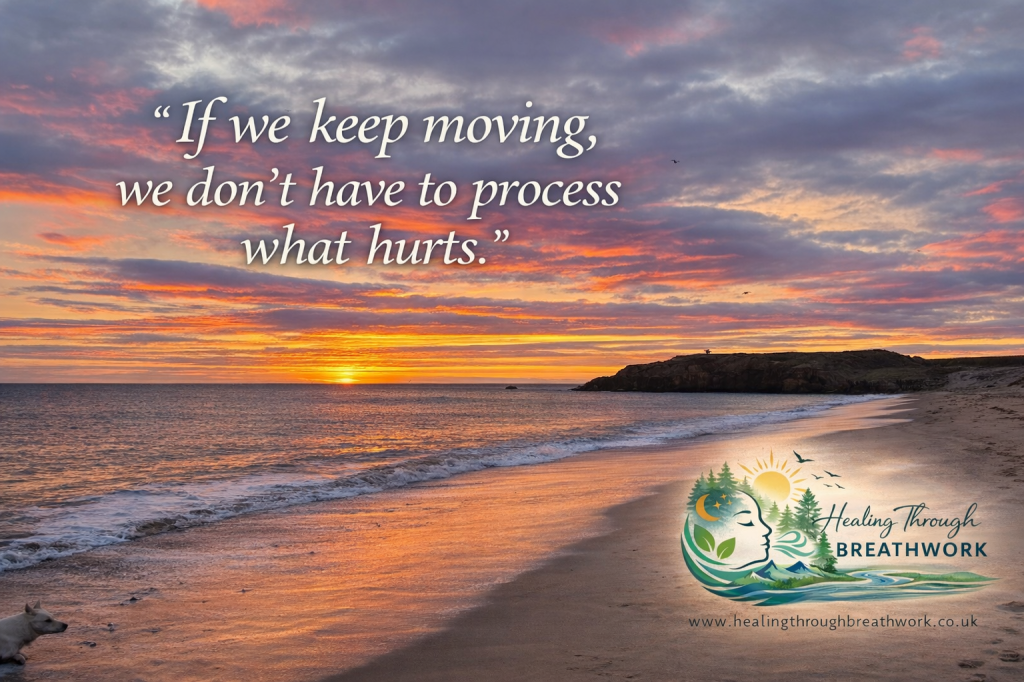
For much of my life I kept moving. I organised events, built communities, created spaces for others to connect and feel alive. From the outside it looked exciting, satisfying, vibrant and purposeful, but underneath my nervous system was constantly running in survival mode. I didn’t realise that busyness had become a way of protecting myself from what I was carrying inside. If we keep moving, we don’t have to process what hurts. Eventually my body began to ask for something different. The exhaustion, the health struggles, and the quiet moments I had spent avoiding became invitations to slow down.
Breathwork became the first place where I learned that it was possible to pause, to feel, and to discover that even the emotions we fear most can move through us when we meet them with breath, awareness, and compassion.
Breathwork became an enormous part of this turning point.
From my very first experience I completely surrendered to the process. An intense mix of shamanic healing, sound bowls, rattle work and breathwork. Surprisingly as for decades prior I had the limiting belief that my ADHD brain wasn’t even capable of basic guided meditation. I didn’t realise how hard I was running away from my truths.
This was the first time I ever found any true relief from the pain I had been experiencing and this then became a practice of returning — returning to my body, to stillness, and to a sense of safety I had rarely felt before.
When I stepped away from city life and began living on the road in a van with my dogs, I entered a very different rhythm of life. Nature slowed everything down. Without constant stimulation or distraction, I began to listen to my breath for the first time while I grieved and rebuilt myself. Reignited my neural pathways and reprogrammed my nervous systems.
The breath was the simple act and it changed everything.
Breathwork helped me:
- regulate my nervous system
- process emotions I had suppressed for years
- reconnect with my body
- rediscover joy without substances
- and develop a deeper relationship with myself
Today, I’m building a life that moves at a different pace.
My days include meditation, connection with nature, sound, philosophy, and community spaces rooted in presence rather than escape.
Through my training as a breathwork facilitator, I’m learning how to hold space for others to experience the same reconnection.
This blog — Between the Breaths — is part of that journey.
It explores the moments of expansion, pause, and grounding that shaped my life and the role breath has played in that transformation.
Because sometimes the most powerful change doesn’t happen in the inhale or the exhale…
It happens in the quiet space between them.
All of the photographs in this blog series are taken by me during moments where I intentionally slow down and breathe with the landscape around me.
Photography has become a quiet extension of my breathwork practice. When I step into nature with my camera, I’m not just capturing a view — I’m noticing the rhythm of the wind, the stillness of the trees, the changing light, and the way my own breath begins to settle in response.
These images are part of what I call my “Breathing in Nature” series — small moments of presence where the nervous system softens and the body remembers how to simply be.
Each photograph is taken during those pauses.
Moments where I stop, breathe, and reconnect with the world around me.
My hope is that as you look at these images, you might pause for a breath too.
A Breath Practice That Helped Me Begin
When my nervous system was constantly in fight-or-flight, one of the first practices that helped me was simple regulated breathing.
Try this:
4–6 Regulation Breath
- Inhale gently through the nose for 4 seconds
- Exhale slowly through the mouth for 6 seconds
- Continue for 3–5 minutes
Lengthening the exhale activates the parasympathetic nervous system, which signals safety to the body.
For someone who has lived in survival mode, this simple practice can begin to restore balance.
At first it felt strange to slow down. My body was used to tension.
But breath by breath, the nervous system begins to learn a new rhythm.
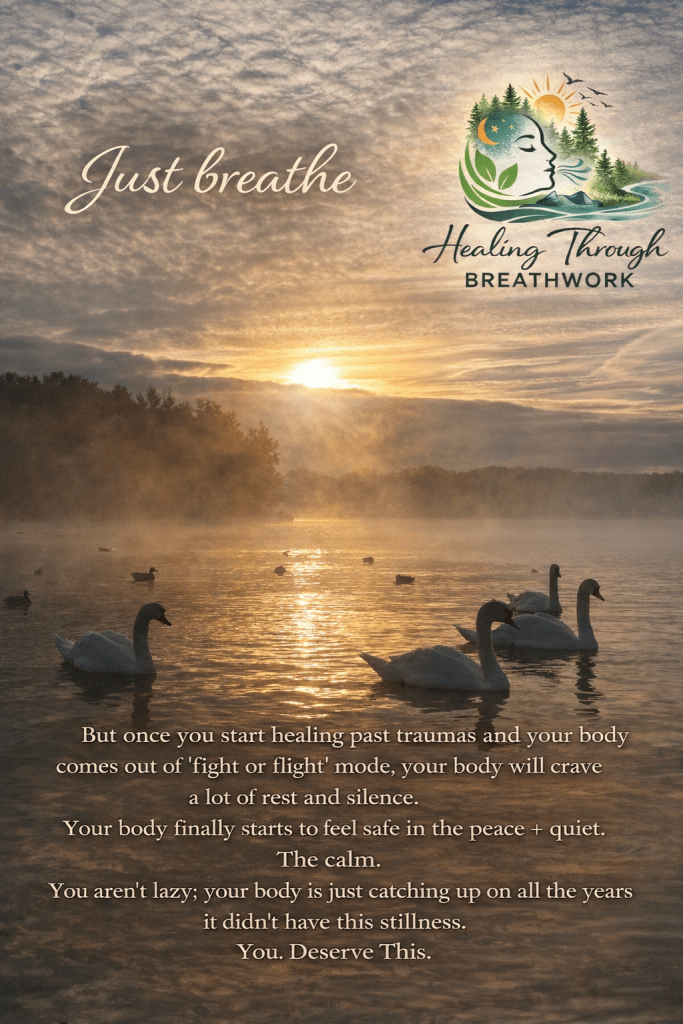
Physiological Sigh (The Body’s Natural Reset)
One of the quickest ways to calm the nervous system is something the body already does naturally — the physiological sigh.
Try this:
Physiological Sigh
Inhale slowly through the nose Take a second short inhale to fully fill the lungs Slowly exhale through the mouth.
Repeat for 1–3 minutes
This breathing pattern helps release excess carbon dioxide and gently resets the nervous system.
For people carrying stress or trauma in the body, it can feel like a subtle “pressure release valve.”
Sometimes one or two breaths like this can shift the entire state of the body.
Coherent Breathing (The Nervous System Harmoniser)
This practice is often used in trauma therapy and nervous system regulation.
Try this:
5–5 Coherent Breath
Inhale through the nose for 5 seconds Exhale through the nose for 5 seconds Continue for 5–10 minutes
This rhythm balances the relationship between the breath, the heart, and the nervous system.
Many people notice a gentle sense of grounding and clarity after just a few minutes.
 HEALING THROUGH BREATHWORK
Leave a comment